Bathroom Remodel in North Georgia: What to Expect
We've been in a lot of bathrooms in North Georgia — some brand new, some pushing sixty years old, and plenty somewhere in between. And across every project, whether it's a quick refresh in Woodstock or a full master suite gut-and-rebuild in Alpharetta, we see homeowners make the same handful of mistakes before the first sledgehammer swings.
This isn't a post to scare you away from a bathroom remodel. In fact, we love them — a well-done bathroom transformation is one of the most satisfying projects a homeowner can take on. But going in without the right knowledge costs real money and real time. So let's fix that.
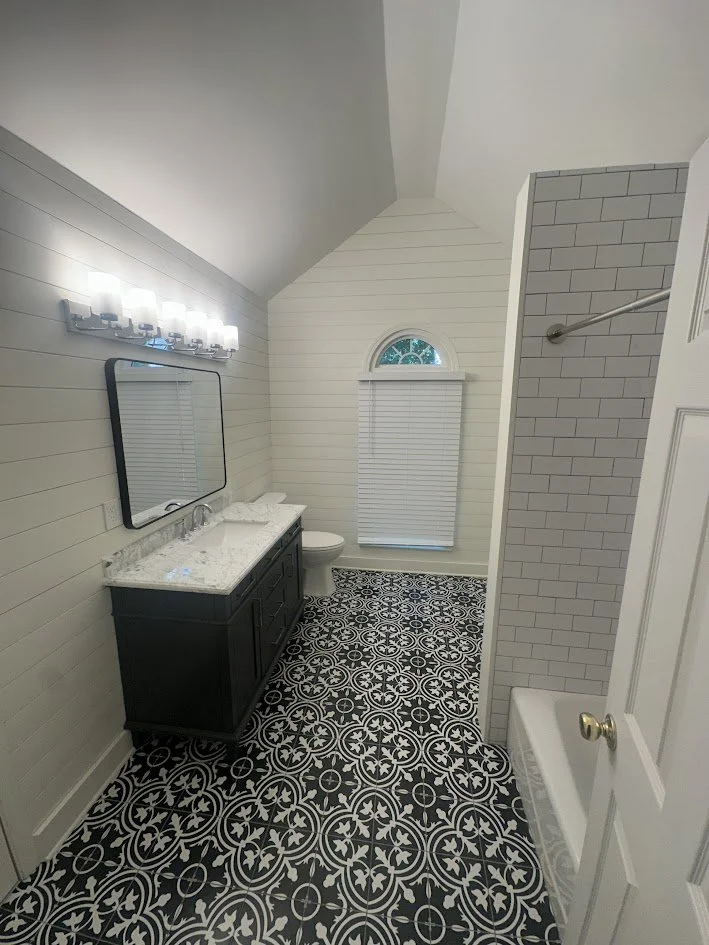
A recent master bath remodel by Centerline Construction — shiplap accent walls, custom patterned floor tile, and a bold black vanity.
The Numbers First: What Does a Bathroom Remodel Actually Cost in Georgia?
Let's get the budget conversation out of the way because it shapes everything else. These ranges come from real projects we've done right here in North Georgia — not national averages pulled from a website:
The biggest driver of cost isn't always the size of the bathroom — it's the scope of what you're changing and the materials you choose. A cosmetic refresh (new vanity, fixtures, paint, and hardware) can make a dramatic difference starting around $3,000. Converting an old fiberglass tub/shower combo to a fully tiled shower — one of our most requested projects — typically runs $13,000–$16,000 depending on your tile selections, niche placement, and whether the layout is staying put. A master bath renovation with layout changes, new plumbing, and updated finishes throughout generally lands in the $20,000–$35,000 range — though that number can climb fast once higher-end fixtures, custom designs, and premium finishes enter the picture.
One number that always surprises people: labor accounts for a significant portion of your budget. That goes toward skilled trades — plumbing, tile work, electrical, carpentry. That's not waste; that's what separates a bathroom that lasts 20 years from one that starts showing problems in three. North Georgia's older housing stock, particularly homes built in the 1960s through 1980s, can also add unexpected costs once walls are opened up — which we'll cover below.
"The budget conversation is the most important one we have before any project starts. Not because we're trying to qualify you — but because the materials you choose, the scope you set, and the contractor you hire all flow from that number."
— Alfred, Centerline ConstructionThe ROI Reality: Is a Bathroom Remodel Worth It?
Short answer: yes — if you do it right. A mid-range bathroom remodel currently returns about 80 cents on the dollar at resale, which is the highest return since 2007. The upgrades that consistently pay back the most are:
- Walk-in showers replacing old tub/shower combos (especially in master baths)
- Updated vanities and mirrors — first impression items buyers notice immediately
- New tile on floors and shower surround (timeless over trendy)
- Functional improvements — better ventilation, water-efficient fixtures, improved lighting
Luxury finishes can feel incredible, but they return less at resale than a well-executed mid-range remodel. If you're staying in the home long-term, premium selections may absolutely be worth it for your quality of life. If you're thinking about selling in the next few years, mid-range choices almost always win on paper.
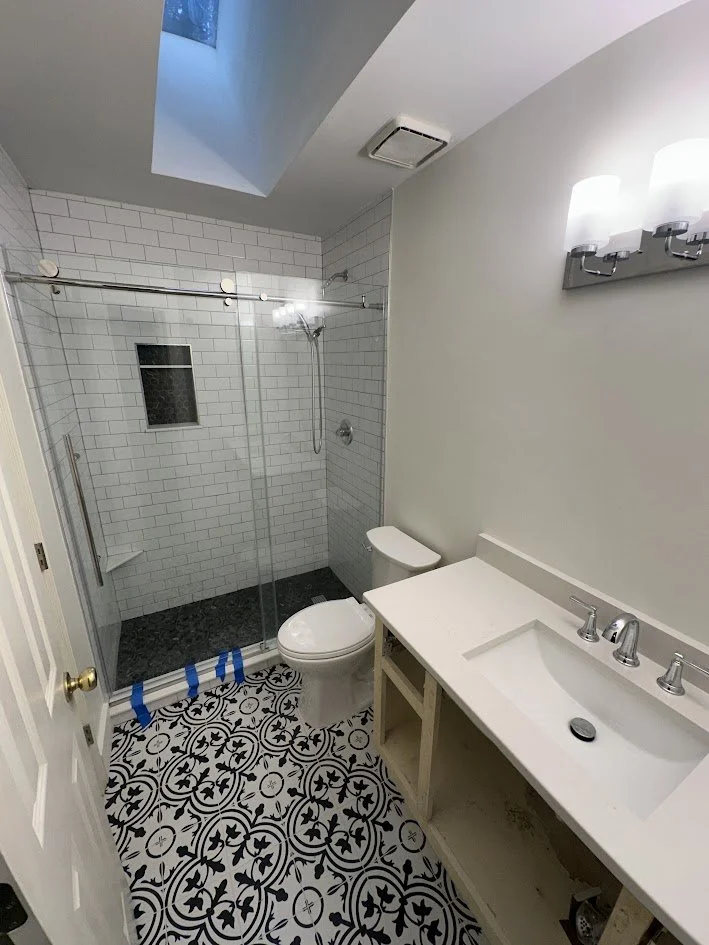
Before: a dated fiberglass tub. After: a fully tiled walk-in shower with subway tile, glass slider, and statement floor tile.
What We See in North Georgia Homes (That Nobody Warns You About)
North Georgia has a unique set of conditions that affect bathroom remodels differently than new construction areas. If your home was built before 1990, pay special attention here.
Wood Rot — More Common Than You Think
Our climate is humid. Bathrooms trap moisture. In older homes — especially around tub surrounds, window frames, and subflooring near toilets — we regularly find wood rot hiding behind tile and drywall. We've opened walls that looked fine on the surface and found floor joists that needed sistering before we could lay a single tile. Build a 10–15% contingency into your budget for discoveries like this, and choose a contractor who'll be straight with you when they find it.
Outdated Plumbing
Homes in Canton, Holly Springs, and surrounding communities built in the 1960s–1970s often have galvanized steel pipes. Galvanized corrodes from the inside out, restricting water flow and eventually failing. If we're opening walls anyway for a remodel, it often makes sense to replace supply lines at the same time. It adds cost upfront but avoids a much more disruptive job later.
Ventilation Problems
Georgia homes that predate modern building codes frequently have bathroom exhaust fans venting into the attic rather than outside. This pumps moisture directly into your attic, leading to mold and decking damage. Correcting this during a remodel is straightforward — ignoring it means the rot problem comes back.
Know who you're working with. Before signing any contract, make sure your contractor is a licensed business in the state of Georgia and that they follow local and state building codes. Ask for proof of licensure and insurance — a reputable contractor will hand it over without hesitation. It's also worth asking how they handle permitting and inspections on projects like yours. Permits exist to protect you: they ensure plumbing, electrical, and structural work gets a second set of eyes before walls close up. A contractor who takes that seriously is one who takes your home seriously.
The Right Order of Operations
One of the most expensive mistakes in bathroom remodels is doing things out of sequence. Here's the order that protects your investment:
- Design and material selection first. Finalize your tile, fixtures, vanity, and layout before demolition starts. Lead times on materials — especially tile and custom vanities — can run 4–8 weeks. You don't want your bathroom gutted while you wait on a back-ordered shower pan.
- Permits. Submit for permits before demo. Don't demo first and ask questions later.
- Rough work (plumbing, electrical). Any drain relocations, supply line changes, or electrical upgrades happen before walls close up.
- Inspections. Rough-in inspections happen before you close walls. This protects you and ensures the work is done correctly.
- Ceiling, then walls, then floors. Always work top-down so debris from higher work doesn't land on finished surfaces below.
- Fixtures and trim last. Toilets, vanity tops, mirrors, lighting, and hardware go in after all the "dirty" work is done.
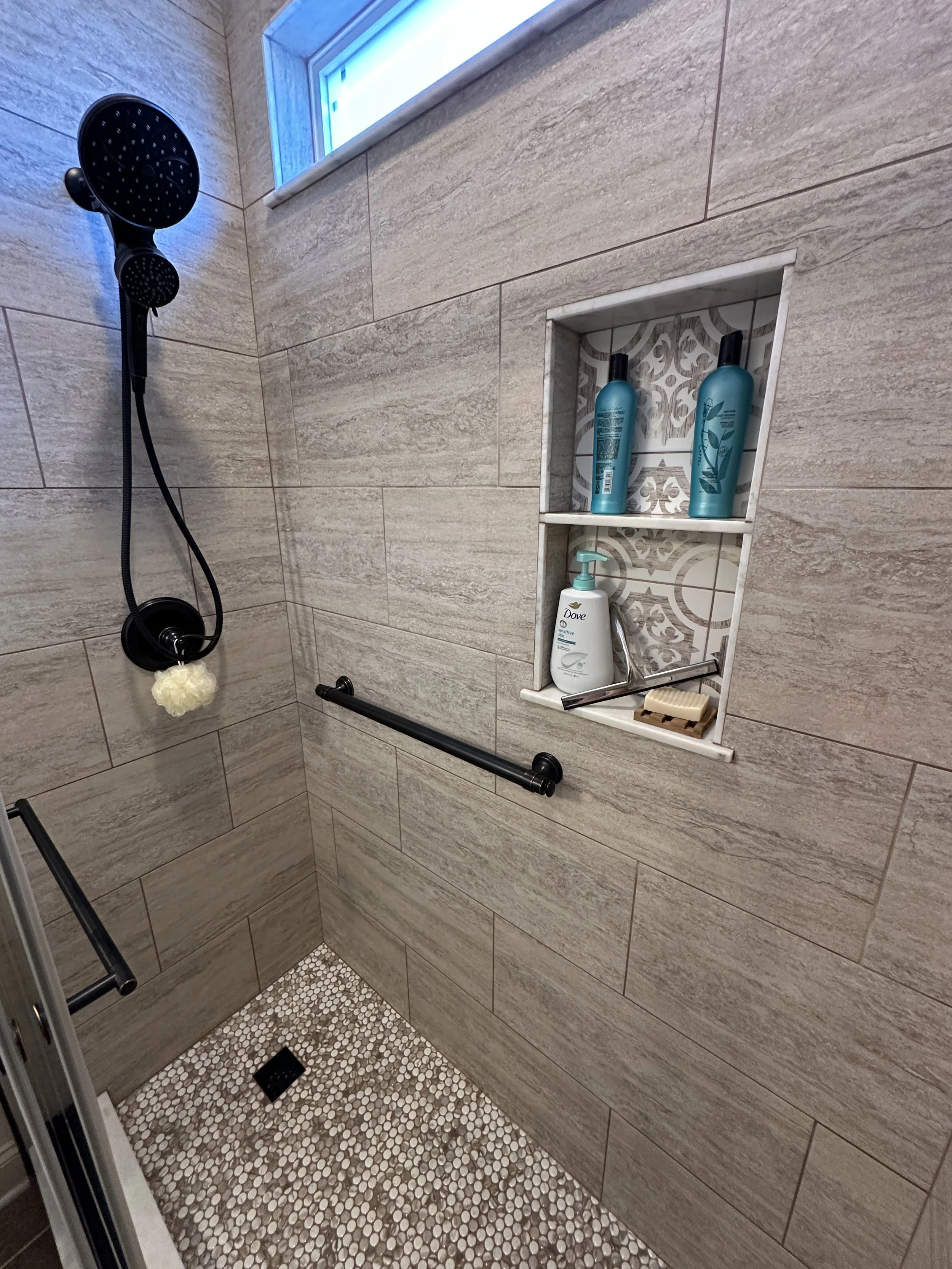
Details matter — a built-in niche with decorative accent tile, penny mosaic shower floor, and matte black fixtures tied together with large-format wall tile.
Before You Call a Contractor: Your Pre-Project Checklist
- Know where your water shutoff valves are (main house shutoff + any under-sink shutoffs)
- Take photos of your existing bathroom from every angle
- Measure the space accurately — floor dimensions, ceiling height, window and door locations
- Decide on your must-haves vs. nice-to-haves before getting quotes
- Research materials and have inspiration photos ready
- Set a real budget — and tell your contractor the true number
- Add 10–15% contingency for discoveries (especially in older homes)
- Plan for an alternative bathroom during construction if this is your only one
- Ask for a written, itemized contract before any work starts
- Verify your contractor is licensed, insured, and follows local building codes
Choosing the Right Contractor in North Georgia
There's no shortage of contractors in Cherokee and Pickens counties. Here's what separates a contractor worth trusting from one who'll give you headaches:
- They inform you about local permitting requirements. A good contractor will walk you through what's required for your project and make sure you understand the process — so there are no surprises.
- They give you a written, line-item estimate — not a vague number scribbled on a notepad.
- They communicate proactively. The job will have surprises. What matters is that you hear about them from your contractor, not when you discover them yourself.
- They have references in your area. Ask to see projects in Canton, Woodstock, or Alpharetta — similar home ages, similar conditions.
- They carry general liability and workers' compensation insurance. If a worker is injured on your property and there's no workers' comp, that liability can fall to you.
At Centerline Construction, we believe good work is its own advertisement. Most of our projects come from neighbors referring neighbors — which means every bathroom we tile, every vanity we set, every shower we waterproof has our reputation attached to it.
One Last Thing: Don't Rush the Design
We've seen homeowners spend months agonizing over grout color and then rush the layout decision. The layout is where the money is. Moving a drain four inches sounds simple — it can add significant cost because it involves cutting concrete, rerouting drain lines, and patching the subfloor.
If your existing layout works functionally, the most budget-friendly remodel keeps the toilet, shower, and vanity in their current positions and invests in new surfaces, fixtures, and lighting. You can dramatically transform a bathroom's look and feel without ever touching the plumbing locations.
If you're set on a new layout, budget for it properly and don't let anyone talk you into doing it cheap.
Ready to Talk Through Your Bathroom Project?
We serve Canton, Holly Springs, Woodstock, Alpharetta, Roswell, and surrounding North Georgia communities. If you're in the planning stage — or just curious what your bathroom might cost — we're happy to walk through it with you. No pressure, no hard sell. Just an honest conversation from people who've done this work for years and care about getting it right.
Let's Talk About Your Bathroom
Free consultations for homeowners in North Georgia. Tell us what you're envisioning — we'll tell you what's realistic.